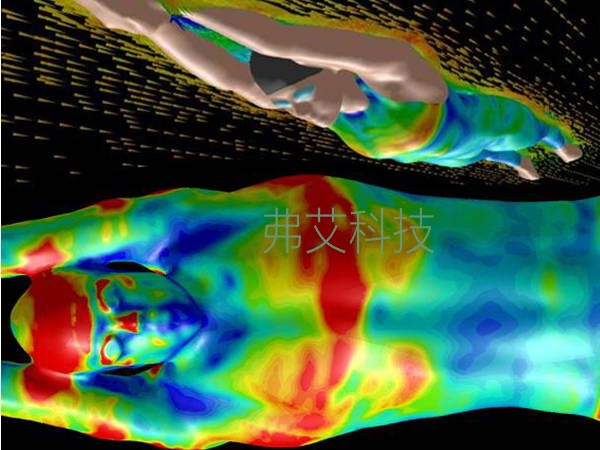
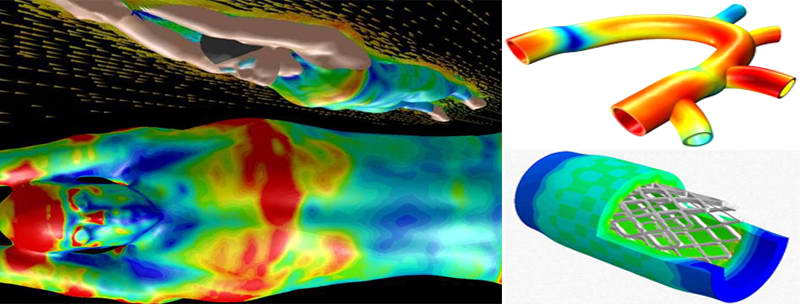
CAE analysis problems in the biomedical field typically include biomechanics of biological solids, bio- and physiological fluid mechanics, cell biomechanics, rehabilitation engineering mechanics, and musculoskeletal mechanics. As simulation analysis technology continues to advance and domestic and international researchers place increasing importance on healthcare, significant progress has been made in these five areas through experimental and simulation analysis, as well as analytical computation, particularly in simulation analysis, with numerous new developments in both constitutive material model development and simulation method innovation. Due to the repeatability, high efficiency, and versatility of CAE simulation, it is widely favored by researchers. F.A. Technology possesses practical CAE simulation experience in several of the aforementioned fields and has developed comprehensive CAE solutions for the biomedical field.
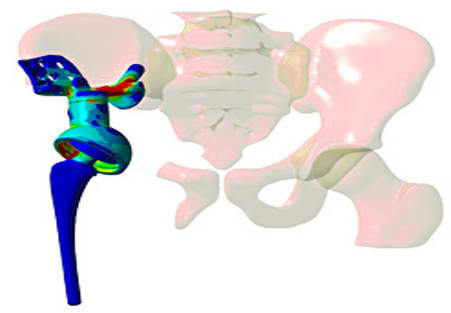
Bone stress
Artificial hip, knee, spinal, and other bone implants face significant challenges, including material properties, human physiology, surgical procedures, and manufacturing processes for artificial bones. CAE analysis can be used to avoid industry risks, increase awareness, and accelerate development in the medical industry.
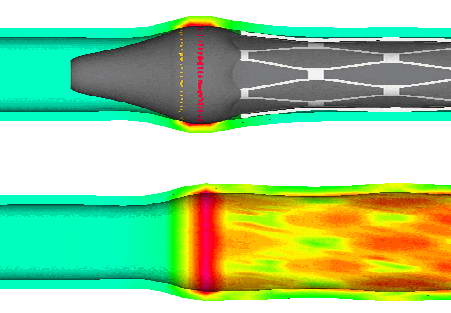
Vascular
Because the heart is a mysterious and complex organ, medical professionals treating cardiovascular diseases face dynamic challenges. Doctors have been able to address a range of debilitating heart conditions through the use of both implantable and non-implantable devices. Implantable cardiac devices, such as stents, coils, and heart valves, as well as non-implantable cardiac devices, are becoming increasingly complex and stringent according to their product specifications.
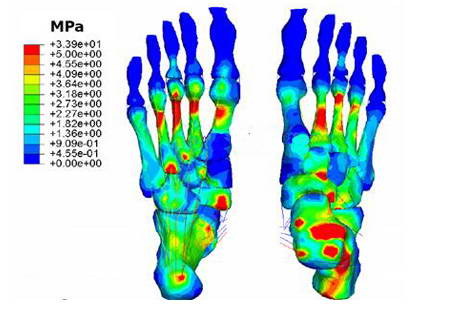
Foot calculation
A correct understanding of the biomechanics of the normal foot is essential before any orthotic correction and surgery. Information on the distribution of stress and strain in the foot and ankle enhances the understanding of the foot-ankle complex. Experimental studies on the movement and load distribution of the foot and ankle complex are expensive and difficult. The finite element method allows for effective analysis of load conditions, structural, and material variables in predicting joint movement and load distribution between the foot and soft tissues.